
Quick Summary / Key Takeaways
- Mica offers exceptional thermal stability, with typical continuous service temperatures of ~500 °C for muscovite and 700 °C for phlogopite, depending on the grade, binder system, and sheet thickness.
- High dielectric strength (typically ~25 kV/mm at 20 °C when tested in accordance with IEC 60243) makes the mica sheet a reliable material for high-voltage electrical insulation in demanding power systems.
- Phlogopite mica offers higher heat resistance compared to muscovite but generally exhibits lower tensile and flexural strength than muscovite-based mica sheet grades.
- Modern binders such as silicone resin are crucial for maintaining structural integrity at elevated temperatures and are commonly specified in accordance with IEC 60371 requirements for mica-based insulation materials.
- Precision machining and controlled cutting and forming processes enable the creation of complex geometries in EV battery spacers, slot liners, arc barriers, and aerospace insulation components.
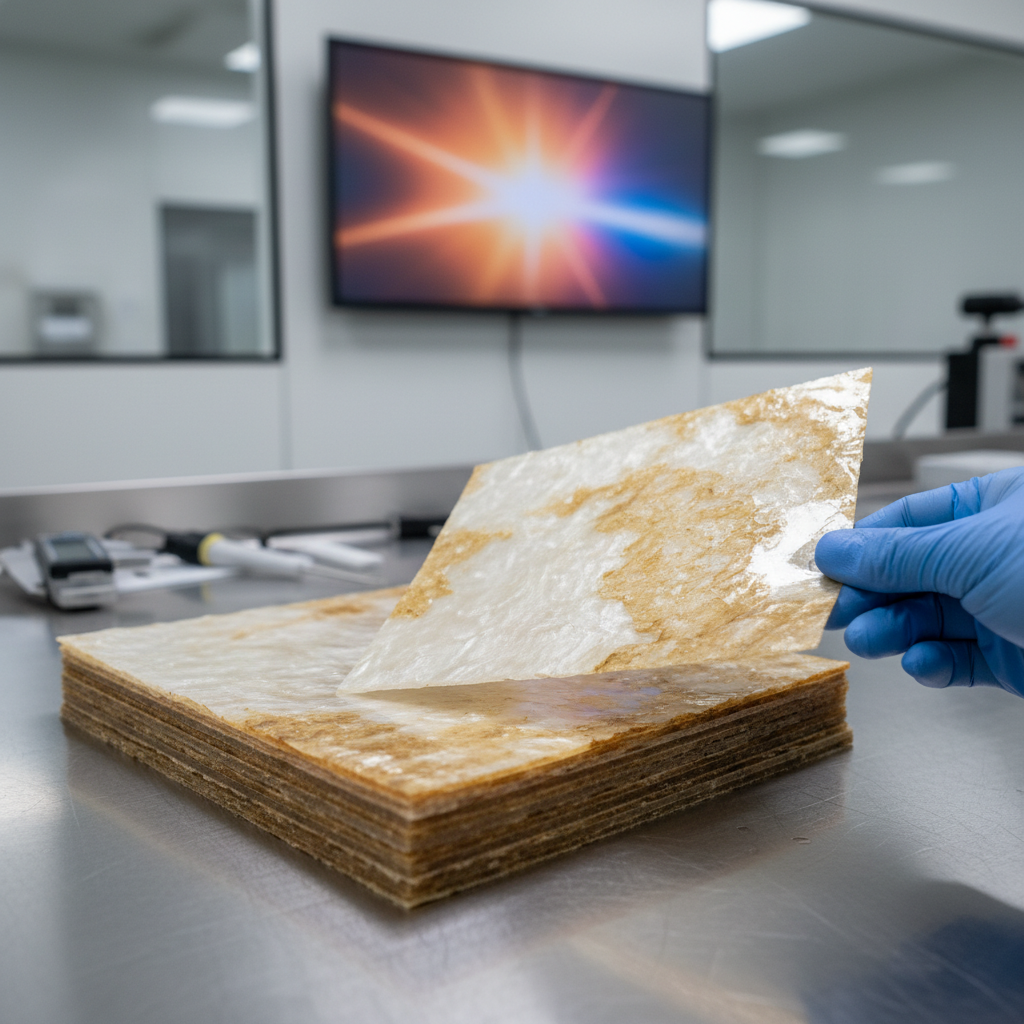
Mica sheet material serves as a critical insulation material in modern engineering applications requiring defined thermal endurance and electrical isolation performance, offering a well-documented combination of high-temperature stability and dielectric strength verified under IEC test standards such as IEC 60243 (dielectric strength) and IEC 60371 (mica-based insulating materials). Engineers across aerospace, automotive, EV, power-generation, and heavy industrial sectors rely on standardized material data and qualification testing to ensure safety in environments where operating temperatures and electrical loads vary significantly.
Whether protecting a battery module in an electric vehicle, serving as a slot liner in rotating equipment, or acting as a barrier in high-temperature furnace assemblies, selecting the correct mica grade is essential for long-term reliability. Choosing the appropriate material requires understanding the differences between muscovite and phlogopite mica, as well as the influence of binder chemistry on continuous operating temperature rating, dielectric retention at elevated temperature, and mechanical property retention under thermal aging.
While the mica mineral provides the primary dielectric and thermal characteristics, the resin system governs structural integrity, dimensional stability, and resistance to thermal cycling. This guide outlines the essential material specifications to evaluate when sourcing mica sheet, with emphasis on IEC 60243 dielectric strength data, IEC 60371 classification, and temperature-dependent dielectric and mechanical performance values rather than nominal room-temperature data alone. By aligning material properties with defined operating conditions, engineers can reduce risks such as delamination, dielectric breakdown, or thermal degradation.
The following sections examine the measurable characteristics that define mica sheet performance in demanding industrial environments, including processing considerations and environmental factors relevant to long-term service stability.
Mica Mineral Performance Comparison
| Property | Muscovite (Silicone Bonded) | Phlogopite (Silicone Bonded) | Synthetic Fluorophlogopite | Calcined Muscovite |
|---|---|---|---|---|
| Continuous Service Temp | ~500 °C | ~700 °C | ~900–1000 °C (binder dependent) | ~950–1000 °C |
| Intermittent Peak | ~800 °C | ~1000 °C | 1100–1300 °C (short-term) | ~1000 °C |
| Dielectric Strength (IEC 60243, 20 °C) | ~25 kV/mm | ~20–25 kV/mm | ≥25 kV/mm | ~20–25 kV/mm |
| Thermal Class (IEC 60085) | Class H (180 °C system dependent) | Class H / C system dependent | Class C system dependent | Class C system dependent |
| Primary Engineering Use | High dielectric purity | High heat resistance | Extreme thermal stability | Fire-resistant cable systems |
| Binder Limitation | Silicone resin dependent | Silicone resin dependent | Silicone or inorganic binder dependent | Silicone binder dependent |
Standard Material Grade Performance
| Material Grade | Tensile Strength (MPa, ISO 527) | Dielectric Strength (kV/mm, IEC 60243-1 @ 20 °C) | Flexural Strength (MPa, ISO 178) |
|---|---|---|---|
| Rigid Board (Silicone-Resin Bonded Mica) | ~110–150 MPa | ~20–25 kV/mm | ~170–230 MPa |
| Flexible Sheet (Mica Paper Laminate) | ~70–100 MPa | ~15–25 kV/mm (dependent on thickness and test method) | ~100–170 MPa |
| High-Temperature Resin System (Phlogopite-Based) | ~90–120 MPa | ~18–25 kV/mm | ~150–200 MPa |
| Battery-Grade Electrical Insulation (Engineered Laminate) | ~120–150 MPa | ~25 kV/mm (initial value at 20 °C; decreases at elevated temperature) | ~180–230 MPa |
Engineering Specification Checklist
- Define continuous and peak operating temperature, including hotspot conditions, thermal gradients, and expected thermal cycling profile.
- Determine required dielectric withstand voltage and safety margin based on system voltage, insulation coordination, and creepage/clearance design criteria.
- Select appropriate mineral type (muscovite for higher dielectric strength and electrical purity; phlogopite for higher continuous operating temperature performance).
- Specify sheet thickness, tolerance class, density, and relevant IEC 60371-2 material designation for the selected mica grade.
Incoming Material Verification Checklist
- Inspect sheets for surface defects, delamination, edge cracking, resin-rich areas, or structural discontinuities.
- Verify thickness, flatness, and dimensional tolerances against approved drawings and specification limits.
- Confirm absence of surface contamination or machining debris that could contribute to surface tracking under electrical stress.
- Where required, validate mechanical properties (e.g., flexural strength per ISO 178) and dielectric strength (per IEC 60243-1) on representative samples.
Table of Contents
Section 1: MATERIAL FUNDAMENTALS
- What is mica sheet material?
- How does Muscovite compare to Phlogopite?
- What is the difference between rigid and flexible mica?
- What are the standard thicknesses for mica?
Section 2: PERFORMANCE SPECIFICATIONS
- What are the thermal limits of mica sheets?
- Why is dielectric strength important in mica?
- How do binders affect mica sheet performance?
- Can mica sheets handle high pressure?
- What chemical resistance does mica offer?
Section 3: INDUSTRIAL APPLICATIONS
- What industries use mica for safety?
- Why is mica used in EV battery packs?
- Is mica sheet material environmentally friendly?
Section 4: ENGINEERING AND MAINTENANCE
- How do you machine mica sheet material?
- How does moisture affect mica insulation?
- How do you select the right mica grade?
Frequently Asked Questions
Section 1: MATERIAL FUNDAMENTALS
FAQ 1: What is mica sheet material?
Mica sheet material is an engineered laminate composed of natural mica (muscovite or phlogopite) bonded with high-temperature silicone or equivalent thermosetting resin systems to provide defined thermal endurance and electrical insulation performance. These sheets leverage the inherent dielectric strength and thermal stability of mica to operate in environments where conventional polymeric materials exhibit softening, dielectric breakdown, or thermal degradation.
Mica sheets are commonly specified in applications such as slot liners, phase barriers, heating element supports, arc shields, and high-temperature insulation assemblies, where dimensional stability and dielectric integrity must be maintained under elevated temperature and electrical stress. The manufacturing process involves layering mica splittings or mica paper with controlled resin content and consolidating the structure under heat and pressure to achieve specified density, mechanical strength, and insulation characteristics in accordance with IEC 60371 material classifications.

FAQ 2: How does Muscovite compare to Phlogopite?
Phlogopite mica provides a higher continuous operating temperature rating than muscovite, making it more suitable for applications exceeding approximately 500 °C continuous service (typical muscovite limit for silicone-bonded grades). Typical continuous ratings for phlogopite-based sheets are approximately 700 °C, with higher intermittent limits up to approximately 900–1000 °C depending on mineral purity, binder system, and sheet thickness.
Muscovite mica, however, generally exhibits higher dielectric strength at ambient temperature (typically ~25 kV/mm per IEC 60243-1 for silicone-bonded sheets) and improved mechanical strength retention at moderate temperatures, making it well suited for high-voltage insulation systems operating within its thermal class. Phlogopite maintains structural integrity at elevated temperatures where muscovite begins to degrade, but may exhibit lower tensile and flexural strength relative to comparable muscovite grades under identical test conditions.
Material selection should therefore be based on defined continuous temperature class, dielectric withstand requirements (per IEC 60243-1), applicable IEC 60371 material classification, and mechanical performance targets rather than temperature alone.
FAQ 3: What is the difference between rigid and flexible mica?
Rigid mica sheets are engineered as structural insulation laminates intended for flat, load-bearing, or panel applications where dimensional stability and compressive strength are required. These sheets typically use controlled silicone resin systems and are consolidated under heat and pressure to achieve defined density, tensile strength, and flexural performance in accordance with IEC 60371-2 classification requirements for mica-based insulation materials.
Flexible mica sheets, by contrast, are manufactured from mica paper bonded with elastomer-modified or flexible resin systems, allowing the material to conform to curved geometries without fracture. They are commonly specified for motor slot liners, phase insulation, coil wrapping, and cable insulation assemblies, where dielectric integrity must be maintained under bending, vibration, or thermal cycling.
Selection should be based on required mechanical rigidity, minimum bend radius, dielectric performance (per IEC 60243-1), thermal endurance class, and installation method rather than form factor alone.
FAQ 4: What are the standard thicknesses for mica?
Mica sheets are typically available in thicknesses ranging from approximately 0.1 mm for thin flexible laminates to approximately 0.2–101.6 mm (8 in.) for rigid board configurations, depending on grade and lamination construction. Thin sheets are specified for applications such as slot liners, phase barriers, and coil insulation where limited radial space and controlled dielectric clearance are critical.
Thicker, rigid laminates are used in structural insulation assemblies, arc barriers, furnace components, and high-temperature equipment where both dielectric isolation and mechanical rigidity are required. Final thickness selection should be based on required dielectric withstand voltage (per IEC 60243-1), mechanical load (per ISO 178 / ISO 527 where applicable), and defined thermal class in accordance with IEC 60371 material classifications.
Custom thicknesses and tolerance control are available to meet defined dimensional and insulation coordination requirements in OEM applications, with tolerance bands determined by sheet thickness and consolidation method.
Section 2: PERFORMANCE SPECIFICATIONS
FAQ 5: What are the thermal limits of mica sheets?
Standard mica sheets exhibit continuous operating temperature ratings determined by mineral type and binder system in accordance with IEC 60371 material classifications. Muscovite-based sheets are typically rated for continuous service up to approximately 500 °C, with intermittent exposure limits approaching 800 °C depending on formulation and thickness. Phlogopite-based sheets generally support continuous temperatures up to approximately 700 °C, with higher short-term exposure limits that may approach 900–1000 °C under controlled conditions and limited dwell time.
Thermal endurance is influenced not only by mineral composition but also by resin system, sheet thickness, and exposure profile (continuous vs. intermittent). Silicone-resin bonded laminates are commonly specified for elevated-temperature applications due to improved thermal aging resistance and better retention of mechanical and dielectric properties during thermal cycling.
Thermal performance should be evaluated against defined operating temperature, hotspot conditions, insulation class, and expected service life rather than nominal maximum temperature alone.
FAQ 6: Why is dielectric strength important in mica?
Dielectric strength is a critical specification because it defines the maximum electric field a mica sheet can withstand before electrical breakdown occurs. In high-voltage insulation systems, this parameter directly influences insulation coordination, creepage and clearance design, and withstand voltage margins under transient overvoltage conditions.
High-quality mica sheets typically exhibit dielectric strength values in the range of approximately 15–25 kV/mm at 20 °C when tested in accordance with IEC 60243-1, depending on mineral type, binder system, thickness, and conditioning state. Temperature-dependent reduction in dielectric strength should be evaluated where operating temperatures exceed ambient conditions. This performance enables their use in motor slot insulation, busbar barriers, EV battery modules, and power electronic assemblies where electrical isolation must be maintained under elevated temperature and electrical stress.
Without adequate dielectric strength, insulation systems are susceptible to partial discharge, tracking, and eventual dielectric breakdown, particularly in compact, high-energy-density designs.
FAQ 7: How do binders affect mica sheet performance?
The binder system in a mica sheet directly influences thermal class, mechanical strength retention, dielectric stability, flexibility, and resistance to thermal aging. Silicone resin systems are commonly specified for elevated-temperature applications due to their improved thermal endurance, resistance to embrittlement under cyclic heating, and alignment with IEC 60371-2 material classifications for resin-bonded mica sheets.
Epoxy resin systems are typically selected where higher mechanical rigidity, improved interlaminar adhesion, and enhanced moisture resistance at moderate thermal classes are required. However, epoxy-bonded laminates generally exhibit lower continuous operating temperature ratings compared to silicone-resin bonded systems and may demonstrate reduced dielectric retention at elevated temperature.
Binder chemistry also affects outgassing characteristics, dielectric strength retention under thermal stress, moisture absorption behavior, and long-term dimensional stability. Accurate evaluation of resin type is therefore essential when defining continuous operating temperature, insulation coordination requirements, environmental exposure conditions, and expected service life.
FAQ 8: Can mica sheets handle high pressure?
Rigid mica sheets provide defined compressive strength and dimensional stability under mechanical load, enabling them to maintain dielectric and thermal insulation performance when subjected to clamping forces or static compression in high-temperature assemblies. Compressive performance is influenced by mineral type (muscovite vs. phlogopite), resin system, density, and thickness, and should be verified against specified mechanical data (e.g., compressive strength per ASTM D695 or ISO 604, as applicable to thermoset laminate structures).
They are commonly specified as structural insulation spacers, arc barriers, heater supports, and furnace insulation components where the material must resist compressive load while maintaining dielectric integrity at elevated temperature. While mica is inherently brittle in its crystalline form, laminated construction with controlled resin content improves load distribution and compressive load transfer, reducing the risk of crushing when operated within specified design limits.
Compressive capability must be evaluated relative to operating temperature, compressive creep at elevated temperature, fastening torque, and long-term mechanical loading rather than assumed based on nominal thickness alone.
FAQ 9: What chemical resistance does mica offer?
Mica exhibits high chemical stability due to its crystalline aluminosilicate structure, providing resistance to many acids, alkalis, and organic solvents under controlled exposure conditions. Muscovite and phlogopite minerals inherently resist chemical attack; however, overall laminate performance is influenced by the type and content of the resin binder system, which may impose different chemical compatibility limits.
This stability supports use in electrical insulation assemblies operating in chemical processing, power-generation, and heavy industrial facilities where exposure to vapors, oils, or process byproducts may occur. Unlike many thermoplastic insulation materials, mica does not soften, swell, or plastically deform at elevated temperature in the presence of common industrial oils, provided the binder system is chemically compatible.
Chemical resistance must be evaluated relative to specific chemical composition, concentration, operating temperature, exposure duration, and applicable material test data rather than assumed from mineral composition alone.
Section 3: INDUSTRIAL APPLICATIONS
FAQ 10: What industries use mica for safety?
Industries including aerospace, automotive (particularly EV platforms), power generation, and heavy electrical manufacturing specify mica laminates where validated thermal endurance class, dielectric strength, and non-combustible material characteristics are required for electrical insulation performance.
In aerospace applications, mica-based insulation materials are used in high-temperature electrical subassemblies, arc barriers, and thermal shielding structures, where resistance to elevated temperature and electrical stress must be maintained in accordance with defined qualification and material standards.
In electric vehicle battery systems, mica laminates are specified as cell-to-cell thermal barriers, module-level insulation plates, and fire-resistant isolation layers to support thermal containment design and mitigate propagation under abnormal operating conditions.
In power-generation and transmission infrastructure, mica sheets are used in motor windings, high-voltage transformers, busbar insulation, and switchgear assemblies, where dielectric strength per IEC 60243 and material classification per IEC 60371 are required to maintain insulation coordination and long-term service reliability.
FAQ 11: Why is mica used in EV battery packs?
Mica sheet material is used in EV battery packs as a cell-to-cell thermal barrier and electrical insulation layer designed to delay heat propagation under abnormal operating conditions. In lithium-ion systems, mica laminates help maintain thermal separation between adjacent cells, reducing propagation risk during thermal runaway events.
Phlogopite-based mica sheets are commonly specified due to their higher continuous operating temperature capability (typically ~700 °C) and higher intermittent thermal tolerance (which may approach ~1000 °C depending on grade and binder system), enabling short-term resistance to elevated temperatures generated during cell failure scenarios. In addition to thermal endurance, mica provides dielectric isolation verified per IEC 60243-1, supporting insulation coordination within high-voltage battery modules.
Material selection must consider a defined continuous temperature class, thickness-dependent dielectric strength, mechanical retention at elevated temperature, and integration within the module architecture, rather than relying solely on nominal peak temperature values.
FAQ 12: Is mica sheet material environmentally friendly?
Mica is a naturally occurring silicate mineral and is inherently inorganic and non-combustible. In laminated sheet form, overall environmental performance is influenced by both the mica mineral and the selected resin binder system. Properly formulated mica laminates do not support combustion and do not melt or drip under elevated temperature exposure; however, emissions behavior depends on resin chemistry, operating temperature, and oxygen availability.
Compared to many polymeric insulation materials, mica-based laminates maintain structural integrity at high temperature without significant softening or deformation within their defined thermal class (per IEC 60371 classification). Long service life in high-temperature electrical and thermal insulation applications can reduce replacement frequency in industrial systems, contributing to lifecycle durability. Environmental impact should be evaluated based on raw material sourcing, binder formulation, applicable regulatory compliance (e.g., RoHS, REACH where required), and end-of-life considerations rather than mineral origin alone.
Section 4: ENGINEERING AND MAINTENANCE
FAQ 13: How do you machine mica sheet material?
Machining mica sheet material requires sharp carbide or diamond-tipped tooling to minimize edge chipping and maintain laminate integrity during cutting and drilling operations. Due to the abrasive nature of mica, high-speed steel tools typically exhibit accelerated wear and may contribute to edge delamination or surface fraying.
Preferred processing methods include CNC routing with carbide tooling, diamond saw cutting, and abrasive waterjet cutting for complex geometries or tight tolerances. Feed rate, spindle speed, and tool geometry should be optimized to reduce mechanical stress and limit localized thermal stress within the resin-bonded laminate.
Effective dust extraction and filtration are required during machining to control fine particulate generated during cutting operations and to maintain equipment performance and workplace compliance with applicable industrial hygiene standards.
FAQ 14: How does moisture affect mica insulation?
While mica itself is inherently low in water absorption and dimensionally stable, the laminate’s overall moisture performance is influenced by the resin binder system and conditioning state. Moisture uptake within the laminate can reduce dielectric strength and volume resistivity under elevated humidity conditions, particularly prior to thermal stabilization.
Silicone-resin bonded sheets generally exhibit lower moisture absorption and improved dielectric retention after humidity exposure compared to some epoxy-based systems; however, electrical properties should be verified after conditioning per IEC 60093 (volume resistivity) and IEC 60243-1 (dielectric strength), where applicable. Where humidity performance is critical, additional evaluation per IEC 60371 conditioning requirements should be considered.
If moisture ingress occurs during storage or handling, controlled drying at elevated temperature within the material’s thermal class may be used prior to installation, subject to manufacturer guidance. For outdoor or high-humidity environments, additional sealing, encapsulation, or protective system design should be considered to maintain long-term insulation coordination in accordance with system-level insulation design standards.
FAQ 15: How do you select the right mica grade?
Selecting the appropriate mica grade requires defining continuous operating temperature, intermittent peak exposure, dielectric withstand requirement, and mechanical loading conditions for the specific application. Begin by establishing the required thermal class to determine whether muscovite (typically up to ~500 °C continuous) or phlogopite (typically up to ~700 °C continuous for silicone-resin bonded laminates compliant with IEC 60371) is appropriate.
Next, determine whether the application requires a rigid laminate for structural insulation or a flexible sheet for conformal winding and slot insulation. Finally, verify dielectric strength per IEC 60243-1 (at specified thickness and conditioning state), applicable IEC 60371 classification, thickness tolerance, and environmental exposure conditions (humidity, chemical contact, thermal cycling) to ensure long-term insulation coordination and dimensional stability.